


Habenula and Mental Disorders

Title talk: Habenula and Mental Disorders
Author:
Prof. Dr. Sampoornam W
Professor, Annai JKK Sampoorani Ammal College of Nursing, Komarapalayam, Namakkal
India

Anatomical review
The habenula is an epithalamic structure located at the center of the dorsal diencephalic conduction system, a pathway involved in linking forebrain to midbrain regions. Composed of a medial and lateral subdivisions, the habenula receives inputs from the limbic system and basal ganglia

Functions of Habenula
The habenular nuclei are involved in the following functions:
Pain processing
Reproductive behavior
Nutrition
Sleep-wake cycles
Stress responses
Learning
Implications for psychiatric illness
Emerging preclinical and clinical evidence indicate that the lateral habenula plays a major role in the pathophysiology of depressive illness. Key findings from animal and human studies illustrate the role of the habenula in stress, mood disorders, anxiety disorders, obsessive compulsive and related disorders (OCRD), schizophrenia, sleep disorders and substance use disorders. Despite its relatively small structure, the habenula has been the focus of an increasing number of investigations in psychiatric research.
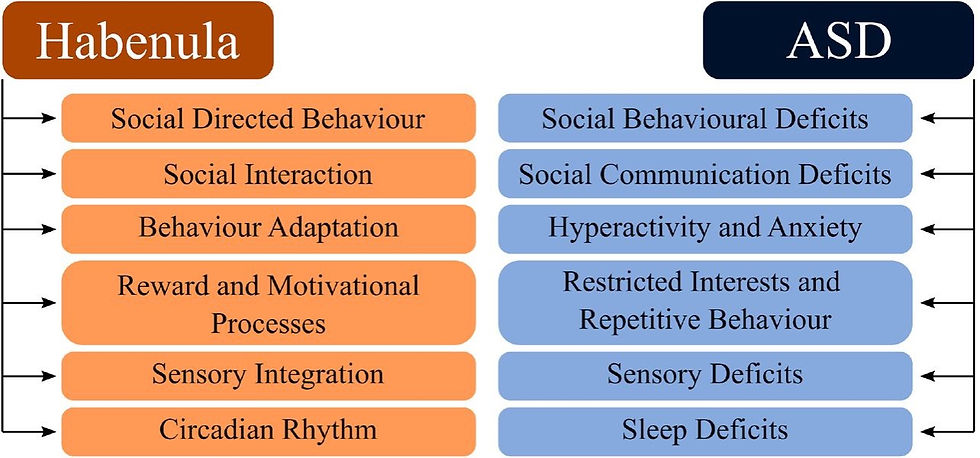
A new study suggests that a small brain region called the habenula may play a role in autism spectrum disorders (ASD). The researchers found that the habenula was significantly enlarged in individuals with ASD.
Futuristic research
Extensive research has been conducted to reveal the molecular and cellular mechanisms in the habenula that influence cognitive and affective functions as well as dysfunction implicated in psychiatric disorders. Habenular deficits were relevant to the pathophysiology of Major Depressive Disorder (MDD) and Attention Deficit Hyperactivity Disorder (ADHD).
There are several studies that still need to be done on the habenula, and what will be learned in the next few years will allow us to better understand how regulatory systems control motivated behavior and may offer a window to further develop therapeutic strategies.


